
Portola Music Festival 2026 Recap: Inside San Francisco’s Unpredictable Electronic Playground

Words and Photos by Lauren Beck

Fall arrived with a bang. The crisp, dewy clouds started to evaporate over the shimmering Bay, ushering us into the industrial playground of Portola. I walked in without any set expectations, eager to dive into all that Portola had to offer. As I got the lay of the land and mapped out the electronic playground, I found it spacious yet comfortable and easy to navigate. Bass echoed and bounced off the cranes and concrete beneath my feet, while an electrifying mass of crowds flowed into the dark, club-immersive stage called the Warehouse. While exploring the grounds, I discovered that each stage offered its unique niche and experience to behold.
Did Portola live up to the house-electronic-forward festival I anticipated? Somewhat. I found more variety in the directions that the artists’ sounds transported me than I initially expected. I heard techno, trance, big room house, and pop, with a dash of experimental. Surprisingly, the festival focused on showcasing distinct electronic sub-genres rather than maintaining an overwhelmingly club identity.


Portola’s lineup reminded me of the CRSSD Festival in San Diego. The selection of artists, the variety of electronic music,and the overall focus on the music were quite similar. Even the backdrop of the Bay and ships made Portola feel like my time at CRSSD.
As I bounced between stages, I noticed the differences, with each performance carving out its own corner of Portola’s electronic playground. The first stage I stumbled upon was Fcukers at the Pier Stage. The crowd became consumed by the electro-pop beats as lead singer Shanny sprang into action, delivering soothing vocals accompanied by catchy basslines. I danced from the sidelines, enjoying the dynamic performance Fcukers delivered. “Play Me” by Fcukers satisfied my drum and bass craving at 170 BPM.

Fcukers’ electro-pop energy and a few of their other hits perfectly set the stage for Swedish artist Tove Lo. As a longtime fan of Ebba (Tove Lo) who has seen her on tour multiple times, I had high expectations. And boy, did she deliver! Dressed cinematically, she wore ostrich-feather wings with a monochromatic brown outfit. She played the hits from her newest album, ESTRUS, which she dropped just days before Portola. Expectedly, she also performed some of her most popular songs. Beyond the familiarity, the set was hypnotic, forcing listeners to fixate on her mesmerizing vocals and the artistry behind her music.
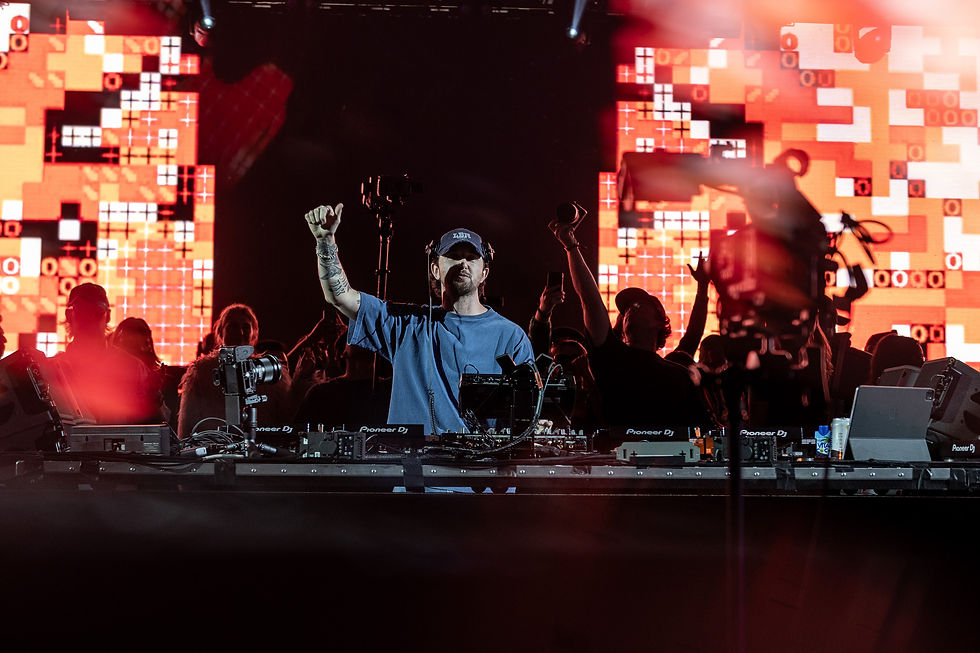

Entering the cave of lasers, known as the Warehouse Stage, Max Styler’s “Uh Oh!” erupted, creating a dance floor that moved in cohesive unison. This set was one of my favorites of the weekend. It felt polished yet gritty at the same time. Classic tech house with an edge and a clear point of view, it was refreshing for someone like me who frequently enjoys a diverse range of house music that can eventually all start to sound the same.


I sauntered over to the Crane Stage, where its glowing aura illuminated the backdrop of industrial cranes. At a youthful 63, Fatboy Slim, a longtime and respected veteran of dance music, was one of the most animated and lively acts of the night. He opened with Willy Wonka’s “Pure Imagination” and played a mix of new school hits and classics like Run-DMC’s “It’s Tricky,” appealing to crowd favorites and movie references that spanned generations. The crowd, filled with people of all ages, burst with smiles. His visuals were eccentric and quirky, as expected. It is always a pleasure to see this legend, and he did not disappoint.


I returned to the Pier Stage for the much-anticipated reunion of Dog Blood, which transitioned into something darker and more hardcore. I had never seen Skrillex and Boys Noize perform together as their collaborative project. The moody set opened with the sound of a man counting down the times of the day and drumming up thumping basslines, enveloped in abundant smoke and neon green lights. They showcased their music alongside mashups and remixes of some of their most famous solo songs. Throughout the set, Dog Blood graced us with new track IDs, obviously unreleased from their vault, assaulting our eardrums. I am not mad about it! Dog Blood delivered a hard set, finally feeding the hungry headbangers of Portola.

I circled back into the Warehouse and made my final stop of the night at Prospa. I expected them to play some classic big tracks that brought them to the top, so I was surprised when they took the set in a techno direction instead. I didn’t hear much house, which was disappointing since I had never seen them live and was excited to finally experience that side of their sound. The energy felt low and slow, not the high-octane energy I believed the Warehouse Stage demanded for the final set of the night. While one could argue it was a fitting nightcap, I felt like I took a shot of warm beer—unsatisfying and leaving much to be desired.
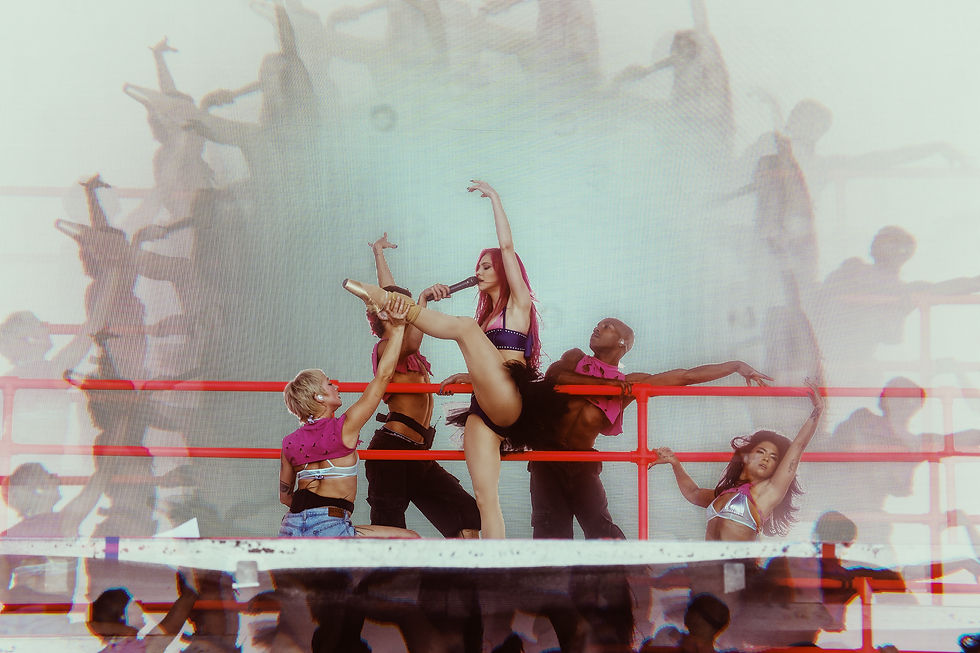


Another day began as seagulls called and the cool misty air dissipated, while clouds decorated the sky for day two of Portola. My feet faced the unknown as I ventured to my first set of the day: ADÉLA at the Crane Stage. She materialized onstage in her bright pink curls and jean jacket, rising to stardom from viral hits like “Ain’t in LA” and “Nicole Kidman.” She started strong and high-energy with “KGB” and continued through her set before reaching my personal favorite, “Death by Devotion.” In her tiny tutu, she performed with classic pop-star dance routines accompanied by backup dancers. Lastly, she sang “Nicole Kidman,” and you could feel the fans emanating joy, screaming with unwavering support and devotion.


Following the tantalizing, hair-raising, euphoric, and dreamy vocals, I found myself at the Pier Stage listening to the groovy and melodic house artist SG Lewis. I have attended SG Lewis’s sets in the past and covered him for Lightning in a Bottle, so I knew he’d bring me back to my nostalgic roots filled with heart and soul. He played some of his most notable tracks and brought out RAHH, the British electronic R&B artist. SG Lewis closed his set with “HEAT,” quite literally bringing the heat and igniting what felt like the beginning of my night. Surprisingly, he did not bring out Tove Lo to perform it live. Instead, RAHH took on Tove Lo’s vocals for the performance.

Finally making my long-awaited journey to Despacio, I arrived under the glimmering disco ball inside the Holy Temple of Music. Lights leaped and danced among a sea of moving bodies, and I saw no phones in sight. The music merged into my soul, awakening my spiritual experience within the sonic womb of Portola. The music was ethereal, light, yet all-encompassing. It was truly a celebration—no focusing on what the DJ was doing, posting videos to social media, or recording every moment with nonstop drones. It brought me back to a time when smartphones did not exist, and one simply lived in the present.


After communion, I traveled back to the Warehouse to catch Tiësto in his element. His set deviated from my past experiences with him, leaning heavily into trance rather than the dancefloor hits we know and love. It was a transadelic breath of fresh air, and you could feel the freedom in his mixing. He appeared to be having fun behind the decks, untethered from the expectation of playing his biggest hits.


Emerging from my transadelic detour, I decided it was time to return to the house that built me. Enter Swedish House Mafia. A longtime dream of mine as a millennial was finally realized: seeing Swedish House Mafia perform live. “Don’t You Worry Child” had been my freshman college dorm anthem since its release, and after their reunion, I finally got the chance to see them perform. The cinematic opening of smoke and fire sent a tingle down my spine, bringing me back to the big room house I knew and loved. Swedish House Mafia played the classics of course: “Don’t You Worry Child,” “Reload,” and “Save the World,” but they didn’t rely solely on the heavy-hitting hits. They also dove into their more recent music, including my personal favorite, “Frankenstein.”
As I gazed into the crowd, I saw attendees hopping onto one of the structural poles, dancing and causing a scene, which perfectly encapsulated the free-spirited, spontaneous energy that Swedish House Mafia brings.


But one final destination remained in my electronic pilgrimage. If unpredictability was music to my ears, Four Tet called me back to the Warehouse. Upon my arrival, a lighting sequence greeted me unexpectedly, one I had never experienced in my many years of raving. A long line of white light fanned out, bathing the crowd like waves crashing onto the shore. Something about it felt evanescent and calming. It captivated the audience, making them the real visual spectacle while simultaneously casting a spotlight on Four Tet.
Four Tet began his set with calming instrumental tracks and gradually transitioned into vocals. By the end, he had moved into trance and experimental genre-blending, transforming the Warehouse in the process. Ed Warren, Four Tet’s lighting designer, elevated the set beyond a purely sonic experience, creating unforgettable visual eye candy. Sound and light merged into one immersive world, making my final moments on Portola’s dance floor feel otherworldly.


As the final wave washed over me, time stood still. I admired the crowd and couldn’t help but smile at the community that made my experience more memorable. Throughout the festival, I didn’t encounter rudeness, hostility, or pack mentality. It struck me just how special it was to experience such a community of hospitality. Many festivals these days draw crowds who want to be seen rather than heard, with the music and culture sometimes feeling secondary. Portola felt different.
It was individualistic, and beyond the attitudes of the attendees, the fashion showcased a playful diversity that mirrored the playground of Portola itself. Outfits ranged from a full ensemble made of disco balls to a man dressed head-to-toe in purple, a woman draped in netted sequins, and couples in matching costumes; personality was everywhere. Individuality flourished, surpassing the standard festival fits seen on Urban Outfitters mannequins.


So, was the pilgrimage worth it? Did Portola provide the more house-focused festival that I expected? The baptism taught me to expect the unexpected and not to assume that artists will stick to predictable paths or solely play the songs that made them famous just because I know the lineup. While Portola didn’t focus exclusively on house and its sub-genres, after experiencing its bread and wine, I discovered a culture and unpredictability entirely of its own.
Overall, I had an incredibly positive experience and felt welcomed into a community where I belonged. I would happily return to the Portola Festival year after year. Stripped of the frills and elaborate theming that often create a festival’s identity, Portola can almost seem to lack a distinct identity. However, beneath the concrete, cranes, and industrial landscape, I realized that its true identity lies in the unpredictability of its artists, the individuality of its people, and a culture that exists without needing to be manufactured.


Comments